

Keith will tell us about using hot water drilling techniques to drill 1000 meters into the glacier to collect sensor data from the top of the ice all the way down to the ocean water below the glacier.

What Your Students Will Learn
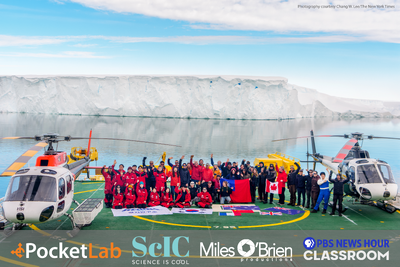
In this 90-minute virtual field trip, your students will journey to the edge of the Earth—live from Antarctica with PBS science journalist Miles O'Brien and researchers aboard the RV Araon:
- Connect live with scientists returning from Thwaites Glacier to hear firsthand how they study one of the most rapidly changing places on the planet
- Go behind the scenes of polar research to see how ships, sensors, and cutting-edge technology are used to monitor glaciers and ocean conditions
- Explore innovative climate solutions like undersea "sea curtains" designed to slow ice loss and protect coastal communities around the world
- Hear directly from glaciologists, oceanographers, and engineers about the real questions driving their research—and how collaboration leads to solutions for our biggest challenges
- Discover how classroom science connects to global research, with a free student worksheet to guide engagement during the broadcast and a video replay to revisit on your own schedule
PocketLab makes teaching easier

Curriculum & Lab Support
In addition to wireless data collection and visualization, this FREE web app includes thousands of interactive, standards-aligned lessons and resources rich with time-saving AI tools for teachers.
Student Worksheets
Create a free Notebook account to assign these lessons digitally. You can also use our Notebook AI tools to translate into other languages, adjust reading level, etc. Instructions are found in the notes at the top using the button below.
Alternatively, after you login to your free Notebook account, you can access a printable PDF version using the blue dropdown button at the top.
Big thanks to our friends at Kesler Science for putting these together. They created a pre-event lesson, during the event lesson, and a post-event reflection lesson.
Virtual Field Trip Highlights
* All times listed in Mountain Time (Denver)
10:00AM
Welcome from PocketLab and Miles O'Brien plus the team aboard the RV Araon
- Intro and background of the glacier and science team
- Student worksheet available for teachers with free Notebook account →
log in / create teacher account
Created by our friends at Kesler Science
- Student worksheet available for teachers with free Notebook account →
10:25AM
Jamin will share how he is deploying his Recoverable Ice Fracture Ocean Explorer Platform for water sampling and acoustic triangulation.
10:40AM
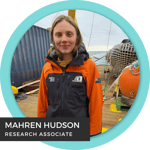
Mahren explains how they are using underwater autonomous glider drones to collect sensor data and map water masses as they move around the glacier.
10:55AM
Chris will give us insight into his ten-day helicopter radar tool campaign mapping ice thickness and subglacial hydrology.
11:10AM
Siobhán will explain how they are improving climate models and satellite observations of sea ice by collecting and analyzing manually collected ice core samples.
11:20AM
Commentary and Closing Remarks
Dave, Miles O'Brien and Climate Scientist, David Holland wrap up our day with Q&A, final thoughts, and next steps for your students.
Bring Sensor Tech to Your Classroom
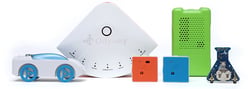
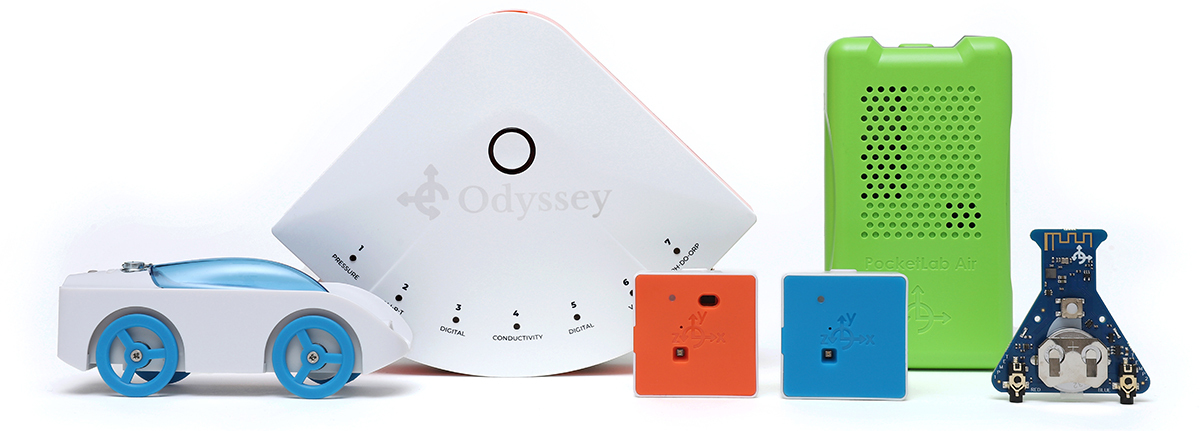
The scientists in Antarctica are using sensor technology to aid in their research. You can put similar, affordable, sensors into the hands of your students to replicate the science.
- Instantly record 30 different measurements such as acceleration, speed, distance, pH, air quality, temperature, humidity, magnetic fields, CO2 and more
- Multi-function, compact and wireless
- Intuitive design facilitates quicker lab prep. Learning just one sensor prepares students for them all.
-
Wirelessly connects with any PocketLab sensor
-
Hundreds of ready-to-use lessons included
- Built-in AI tools help differentiate lessons
-
Real-time data visualization for inquiry learning
Student Challenge
During the field trip we discussed the struggles that the hot water drill team faced. The challenge for your students, come up with an innovative, creative alternative to using hot water drilling. All entries will be judged by our guest, Dr. David Holland, Climate Scientist.
The winner will receive a signed poster from the expedition.
Send your entries to contact@thepocketlab.com

Resources
Take the Next Step
- Explore sensors for your classroom (or request a quote)
- Create your free PocketLab Notebook account
- Access the virtual field trip student worksheet
- Browse the free supplemental lesson library
- Recommended Lessons
-
Examples:
- Ocean Acidification
- Measuring Waves with Backyard Buoys
- Mapping Ocean Floor Features
- Waters Impact on Climate from X-STEM All Access
- Climate Models to Study Sea Level Rise from X-STEM All Access
- Studying a Melting Antarctic Glacier from PBS Classroom
- What Can an Ice Core Tell us from PBS Classroom
- What Scientist's are learning from the Thwaites Glacier from PBS Classroom
- Researchers hit snag in study of Thwaites Glacier from PBS Classroom
-
- Recommended Lessons
More Opportunities
- Register for our next event
- Subscribe to our AI in Education Weekly Newsletter
- Listen to the Science is Cool Unplugged podcast


.png?width=150&height=150&name=Keith%20Circle%20(1).png)
.png?width=150&height=150&name=Jamin%20Greenbaum%20Circle%20(1).png)

.png?width=150&height=150&name=Keith%20Circle%20(2).png)
.png?width=150&height=150&name=siobhan%20Circle%20(1).png)