


The Art of Science Communication with Miles O'Brien
In this episode, we talk with PBS Newshour science correspondent, Miles O'Brien about his career in science communication and education.
2 min read
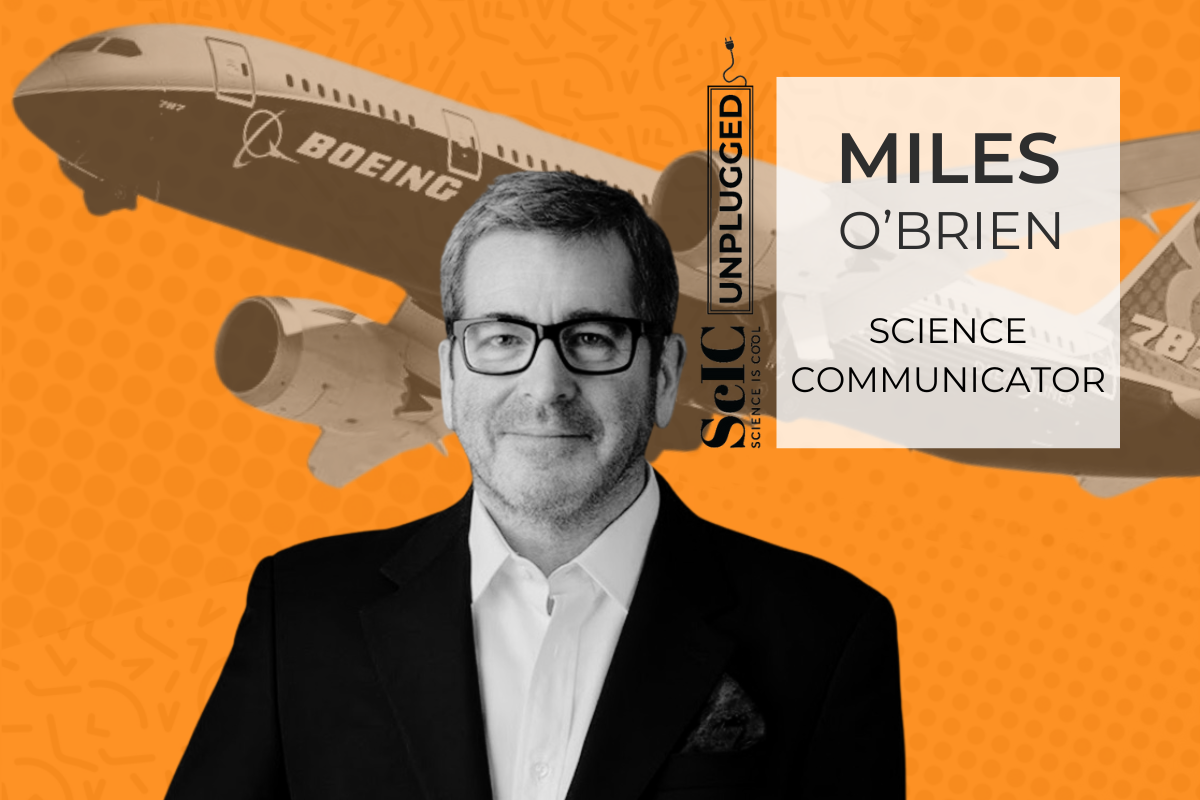

Learn more about Miles on his website: https://milesobrien.com/
Connect with Miles on Twitter at https://twitter.com/milesobrien
Watch Mile's conference session from Science is Cool 8: https://www.thepocketlab.com/video/scic8/miles-obrien

Miles O’Brien is a veteran, award-winning journalist who focuses on science, technology, aerospace, and the environment.
He is the science correspondent for PBS NewsHour, a producer and director for the PBS science documentary series NOVA, and a correspondent for the PBS documentary series FRONTLINE and the National Science Foundation Science Nation series.
For nearly seventeen of his thirty-two years in the news business, he worked for CNN as the science, environment and aerospace correspondent and the anchor of various programs, including American Morning.
While at CNN, he secured a deal with NASA to become the first journalist to fly on the space shuttle. The project ended with the loss of Columbia and her crew in 2003 – a story he told to the world in a critically acclaimed sixteen-hour marathon of live coverage.
Prior to joining CNN, he worked as a reporter at television stations in Boston, Tampa, Albany, NY and St. Joseph, MO. He began his television career as a desk assistant at WRC-TV in Washington, DC.
O’Brien is an accomplished pilot and is frequently called upon to explain the world of aviation to a mass audience. He has won numerous awards over the years, including a half-dozen Emmys, and a Peabody and DuPont for his coverage of Hurricane Katrina and its aftermath.
In February of 2014, a heavy equipment case fell on his forearm while he was on assignment. He developed Acute Compartment Syndrome, which necessitated the emergency amputation of his left arm above the elbow.
Born in Detroit and raised in Grosse Pointe Farms, MI, he is based in Washington, DC. He has a son at the US Naval Academy and a daughter at Davidson College in North Carolina. He was a history major at Georgetown University.


In this episode, we talk with PBS Newshour science correspondent, Miles O'Brien about his career in science communication and education.
Discover innovative ways to inspire students in STEM through hands-on learning and creativity, as discussed by Maynard Okereke on the Science is Cool...
Explore the impact of AI in education with Tammie Schrader, discussing benefits, ethics, and critical thinking skills in the modern classroom.