


ScIC was born out of the Pandemic
ScIC has quickly become the largest conference for science teachers and educators in the world. We have had over 45k registrations from 150+...
3 min read
-2.png)

We're thrilled to celebrate Michelle Morgan, a science teacher at Hull Middle School in Gwinnett County Public Schools, who has been selected as a 2026 National STEM Scholar. Michelle is one of just 10 middle school teachers from eight states chosen to participate in this prestigious program and her winning project features PocketLab sensors at its core.
Created through a partnership between the National Stem Cell Foundation and The Gatton Academy of Mathematics and Science at Western Kentucky University, the National STEM Scholar Program selects 10 teachers each year from a national pool of applicants. Selection is based solely on a “big idea” Challenge Project that the applicant would implement in their classroom. Now in its 11th year, the program has produced 109 National STEM Scholars representing middle schools in 37 states. By June 2027, National STEM Scholars will have directly and indirectly impacted more than 229,000 middle school students in the U.S.
The 2026 National STEM Scholar class will convene at The Gatton Academy from May 24 through May 30 on the campus of WKU in Bowling Green, Kentucky, for a week of advanced STEM training.
Michelle's winning Challenge Project expands a force and motion engineering challenge into a multi-day, data-driven investigation of crash safety design. In this three-day engineering design investigation, students take on the role of civil engineers working for a Department of Highway Safety and tackle a real-world safety question: How should highway crash cushions be designed to reduce injury during collisions?
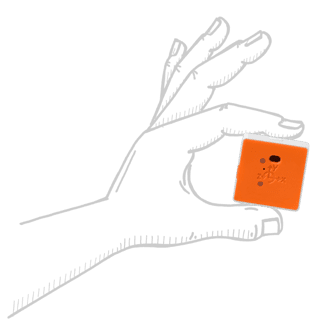
Working in collaborative teams, students design and construct model crash cushions, then use PocketLab G-Force sensors to conduct controlled collision trials and collect real-time acceleration data. The sensors automatically generate graphs, allowing students to analyze peak acceleration and impact duration, and compare how different materials and structural designs affect the rate of momentum change and overall force experienced during a collision. Students complete a Claim–Evidence–Reasoning conclusion supported by quantitative data analysis and graphical interpretation.
As Michelle puts it: “This project is a priority because it transforms abstract physics concepts into meaningful, real-world problem solving. Many middle school students struggle to see the relevance of force, motion, and acceleration beyond textbook equations. By engaging in authentic crash safety engineering using industry-standard PocketLab G-Force sensors, students experience how physics directly impacts highway safety and human lives.”
Michelle's project is extended through PocketLab's Virtual Field Trip: Car Crash Investigation, produced in partnership with the Insurance Institute for Highway Safety (IIHS). This 90-minute virtual field trip takes students inside the IIHS Vehicle Research Center where they can witness a live crash test, go behind the scenes in the crash dummy lab, watch hands-on physics demos using PocketLab sensors, and explore how engineers design safety systems. Students discover STEM careers in automotive engineering, physics, and materials engineering, connecting classroom learning directly to real-world applications.
Michelle's project reflects the same hands-on, data-driven approach at the heart of PocketLab's Crash Science in the Classroom Train the Trainer program, a professional development event held in partnership with the IIHS at their crash test facility in Charlottesville, Virginia. At this immersive PD experience, selected educators receive a VIP tour of the entire IIHS facility, witness a live crash test, participate in hands-on workshops, and receive a PocketLab sensor bundle to bring crash science to life in their own classrooms. Attendees are trained by Dr. Griff Jones, a Presidential Award-winning science educator, and Dr. Clifton Roozeboom, CTO and Co-Founder of PocketLab.
Educators interested in bringing crash science to their classrooms can explore the full Crash Science in the Classroom curriculum and implementation resources.
Research shows that lifelong STEM career decisions are often made during middle school. Programs like the National STEM Scholar Program and tools like PocketLab help ensure that students in those critical years get the engaging, hands-on experiences that spark lasting interest in science and engineering. Michelle Morgan's recognition is a testament to the power of putting real data and real-world problems into students' hands.
Congratulations, Michelle! We can't wait to see the impact your Crash Science project has on your students at Hull Middle School and beyond.
Read the full announcement from Gwinnett County Public Schools here.
ScIC has quickly become the largest conference for science teachers and educators in the world. We have had over 45k registrations from 150+...
.png)
Discover five surprising aspects of PocketLab products, from wireless connectivity to cross-disciplinary applications. Revolutionize your STEM...
-1.png)
Discover how 8th grade students at St-Lambert International High School in Canada use PocketLab sensors to measure water rocket launches.