


Climbing High with PocketLab: Exploring the Science of Climbing
Discover how PocketLabs were employed in a groundbreaking study to unravel the science of climbing falls. Learn how PocketLabs can transform teaching.
4 min read
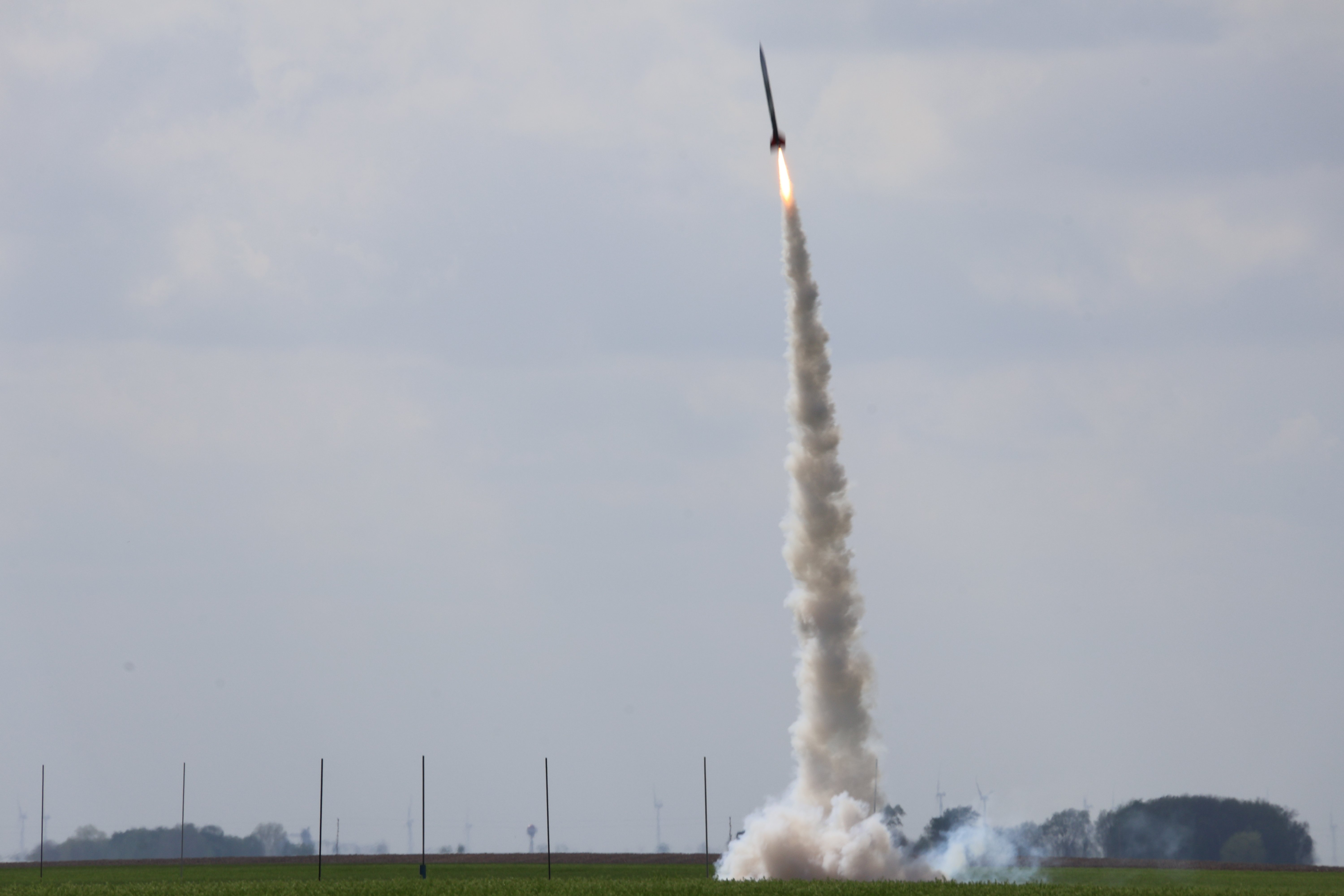
An Indiana science club sent a PocketLab Voyager 2 nearly 7,000 feet into the sky—and brought back authentic data for students to investigate.
By Joachim Ladwig
Science Teacher, Bedford North Lawrence High School
Faculty Sponsor, W9BNL Stars Amateur Radio and Rocketry Club
Yes. Students at Bedford North Lawrence High School installed a PocketLab Voyager 2 inside a high-power rocket and used its onboard memory to record motion and atmospheric measurements during flight.
The project gave students more than an exciting launch. It gave them evidence they could analyze, question, and use to improve their next design.

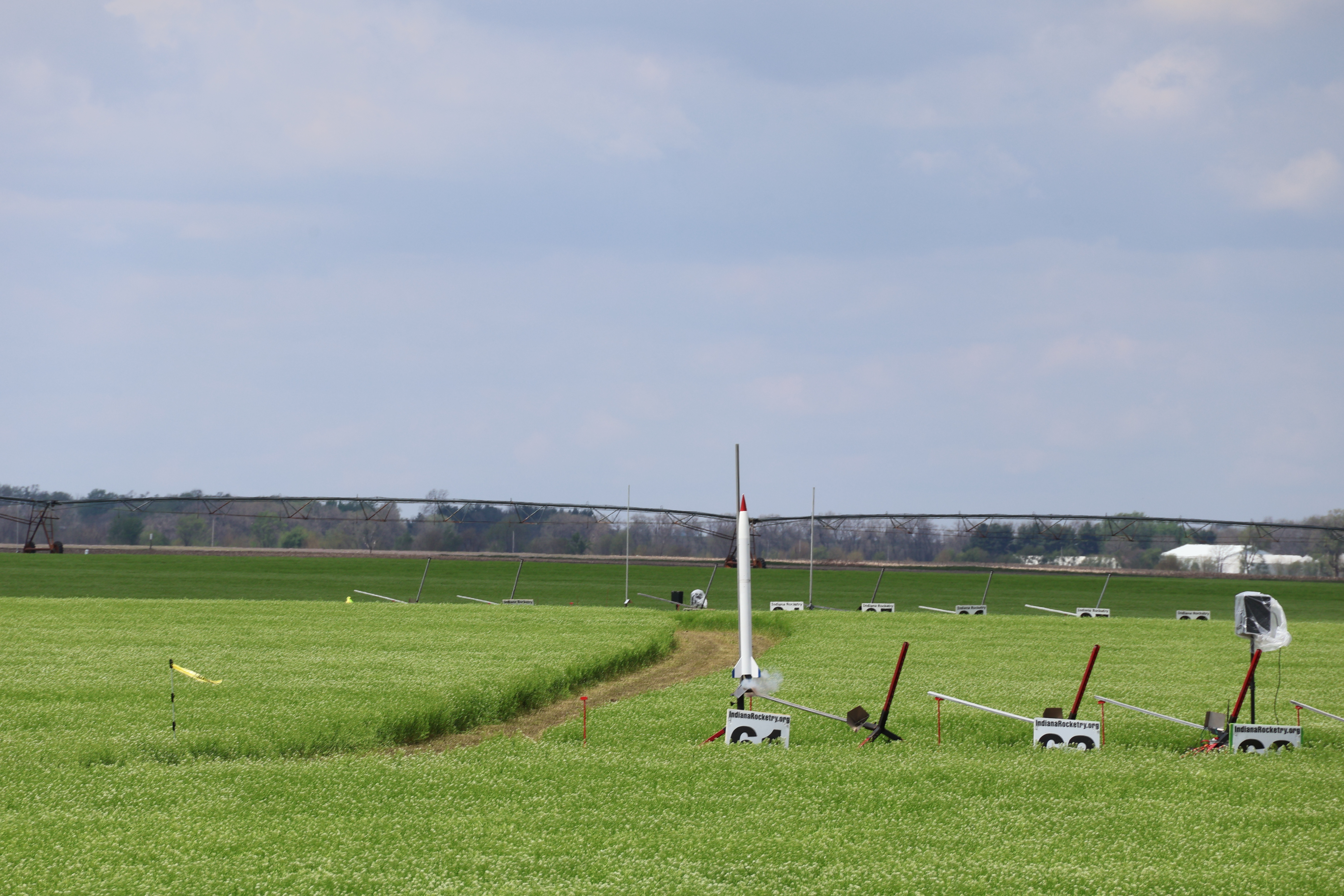
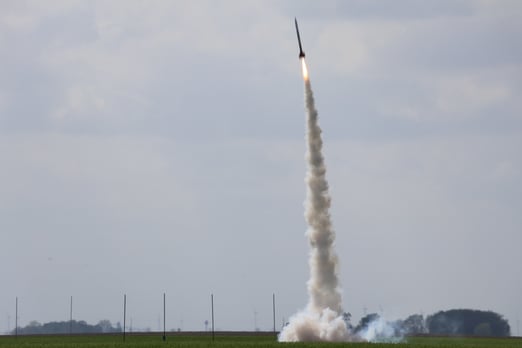
At 1:03 p.m. on April 16, 2026, Fluttershy left the launch rail.
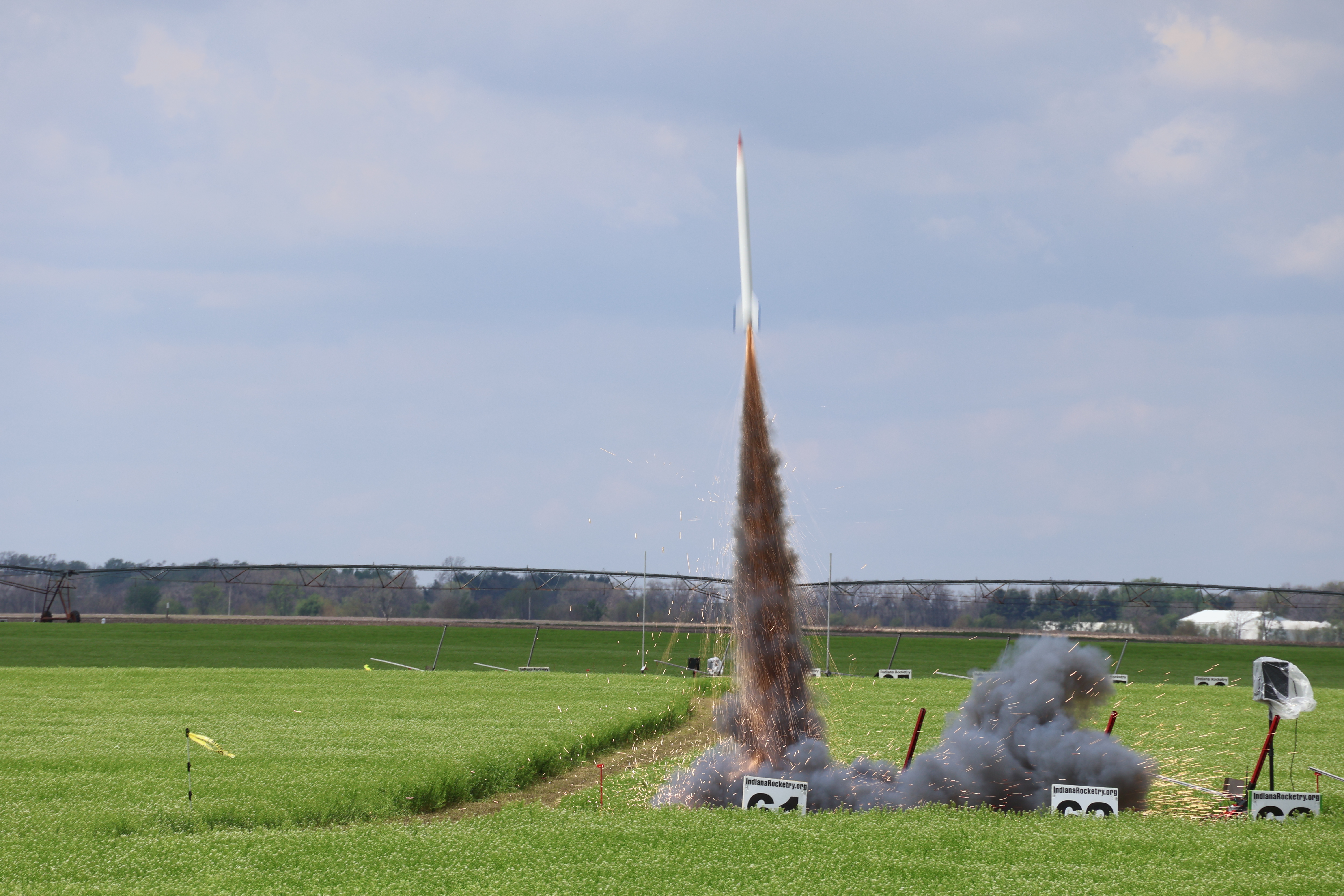
Within seconds, the student-built rocket accelerated through the Indiana sky, climbed more than a mile, and approached the speed of sound. Its flight computer managed a dual-deployment recovery system, releasing a small drogue parachute near apogee and a larger main parachute closer to the ground.
Post-flight analysis reported:
| Flight result | Measurement |
|---|---|
| Maximum altitude | 6,751 feet |
| Approximate maximum speed | 740 mph, or Mach 0.96 |
| Powered-flight acceleration | 11.63 g for 2.9 seconds |
| Recovery distance | Approximately 660 yards |
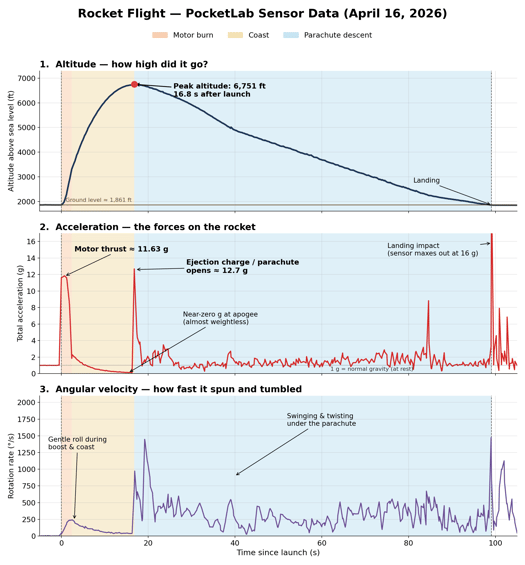
Those numbers made the flight impressive. The ability to collect and interpret the data made it science.
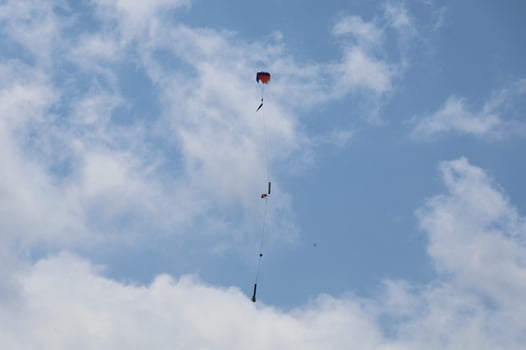
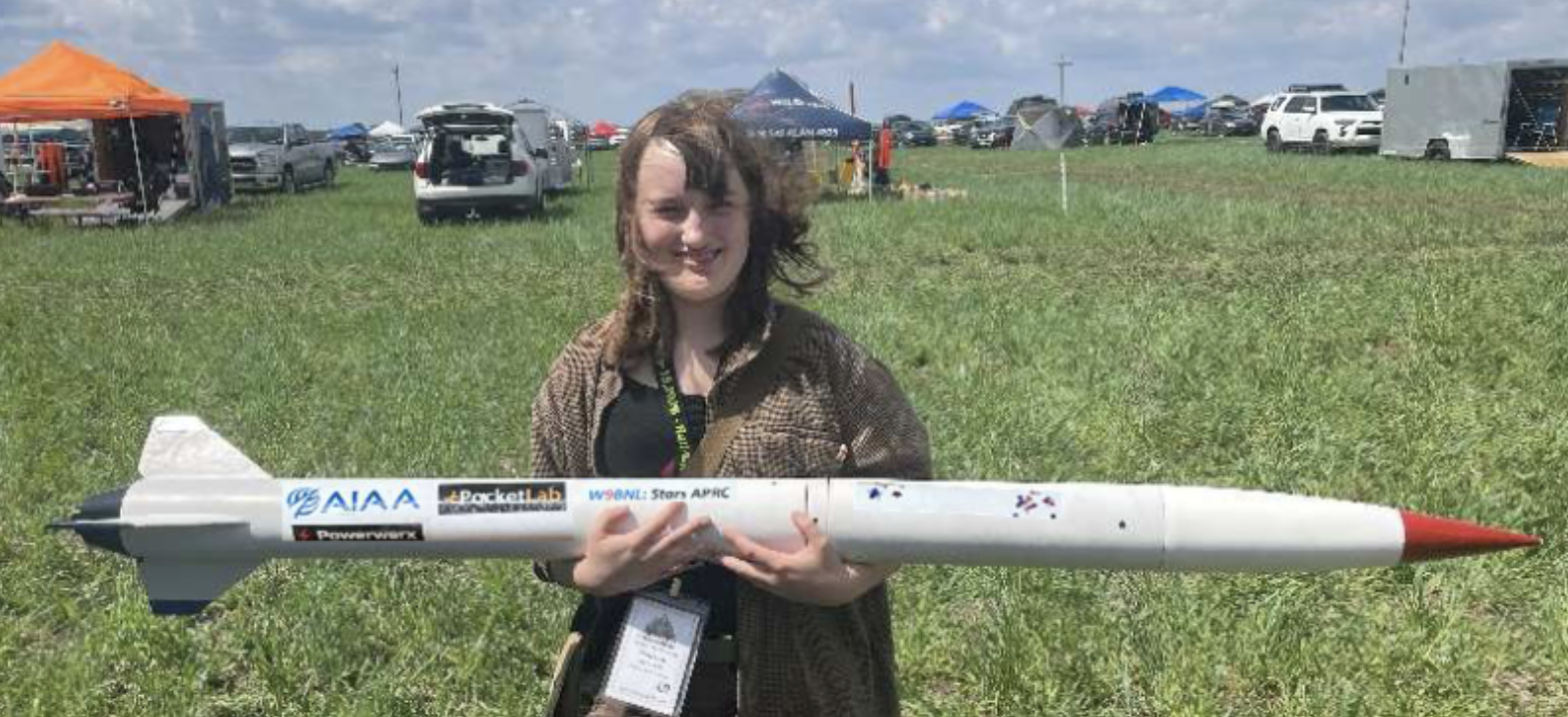
Our students did not want to build a rocket that simply went up and came back down. They wanted to build a rocketsonde: a rocket carrying instruments that could record physical and atmospheric conditions throughout its flight.
The sensor had to be compact, lightweight, capable of recording without a continuous wireless connection, and able to measure more than one phenomenon.
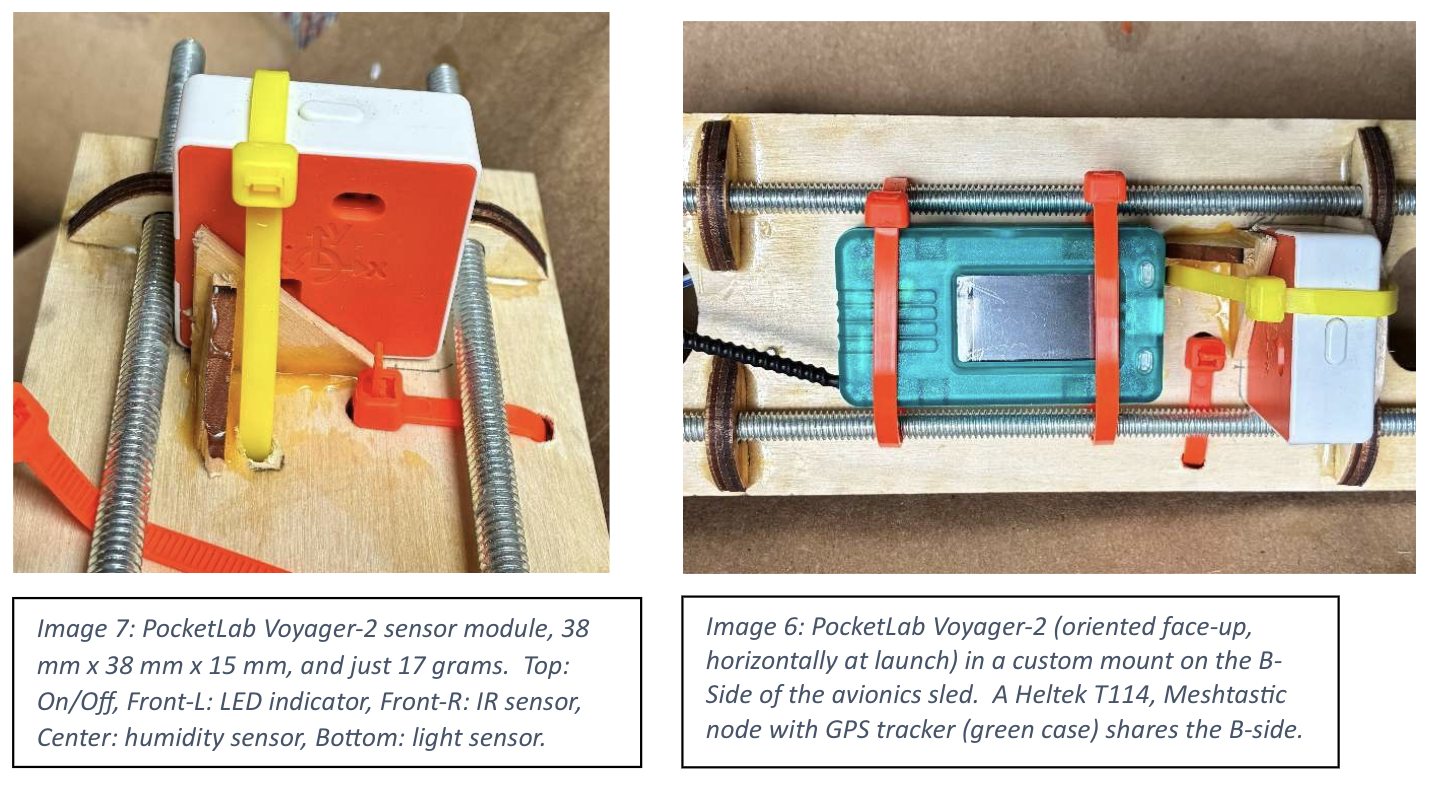
PocketLab Voyager 2 fit inside a custom mount in the rocket's avionics bay. At just 17 grams and 3.8 centimeters square, it added extensive sensing capabilities without dominating the payload.
Before launch, students used Bluetooth to configure Voyager 2 while Fluttershy was on the launch rail. The sensor's onboard memory then recorded data during the flight for download after recovery.
Voyager 2 can measure acceleration, angular velocity, orientation, altitude, barometric pressure, temperature, humidity, magnetic field, light, and distance. That meant one small sensor could connect the flight to physics, Earth science, engineering, mathematics, and data analysis.
Teachers can explain acceleration, pressure, and velocity at the board. Students can solve for them on paper. But data generated by something students designed, built, launched, and recovered has a different kind of power.
The flight invited students to investigate questions such as:
Students were no longer working toward an answer printed in the back of a textbook. They were interpreting their own evidence from an event they had made possible.
That shift—from receiving information to investigating evidence—is the real value of sensor-based learning.
After recovering Fluttershy, we discovered that one stabilizing fin had shattered and separated during flight, likely while the rocket was traveling through the transonic region.
The rocket still deployed its parachutes and returned safely. But the missing fin created a new engineering question.
Students could examine the flight data for signs of the failure. Did the angular velocity change suddenly? Was there a shift in acceleration or orientation? At what point was the aerodynamic load greatest? Should the fin material, shape, or attachment method change before the next launch?
In authentic engineering, an unexpected result is not necessarily a failed lesson. It is often the beginning of a better investigation.
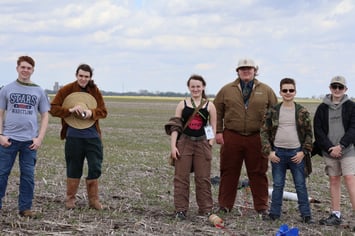
Fluttershy was an ambitious extracurricular project conducted with experienced adult mentors and established rocketry organizations. Most science teachers will not begin with a high-power rocket—and they do not need to.
The same investigation process works at classroom scale:
Because Voyager 2 combines multiple sensors, teachers can use the same device across courses and projects. Students learn one data-collection platform and apply it to many different scientific questions. For a classroom-scale starting point, see our rocketry lessons pairing PocketLab with model rockets.
Students often encounter scientific laws as finished ideas: a clean equation, a polished graph, and a conclusion someone else has already reached.
Real science is more interesting.
Sensors let students capture a phenomenon as it happens, turn it into data, and decide what the evidence means. They can test a design, discover a surprise, defend an interpretation, and improve the next trial.
PocketLab helped our students carry that process more than a mile into the sky. The flight was extraordinary, but the teaching move is repeatable:
Give students a meaningful question, a tool that lets them measure it, and ownership of the evidence.
That is when abstract science starts to feel real.
Voyager 2 measures acceleration, angular velocity, orientation, magnetic field, distance, temperature, barometric pressure, altitude, humidity, light intensity, dew point, and heat index.
No. Teachers can use PocketLab for classroom investigations involving motion, collisions, rotation, weather, engineering design, heat transfer, environmental conditions, and many other phenomena.
Yes. PocketLab Notebook includes customizable, standards-aligned lessons and labs for science classrooms.
Fluttershy returned carrying more than a record of an exciting flight. It brought back evidence of forces, motion, and atmospheric change that students could explore for themselves.
Discover how PocketLabs were employed in a groundbreaking study to unravel the science of climbing falls. Learn how PocketLabs can transform teaching.
Students in Wisconsin are using PockerLab physics sensors in their integrated STEM section to determine if science can identify the perfect soccer...
-1.png)
Discover how 8th grade students at St-Lambert International High School in Canada use PocketLab sensors to measure water rocket launches.